Why Botanical Horror Has Taken Root on Our Bookshelves
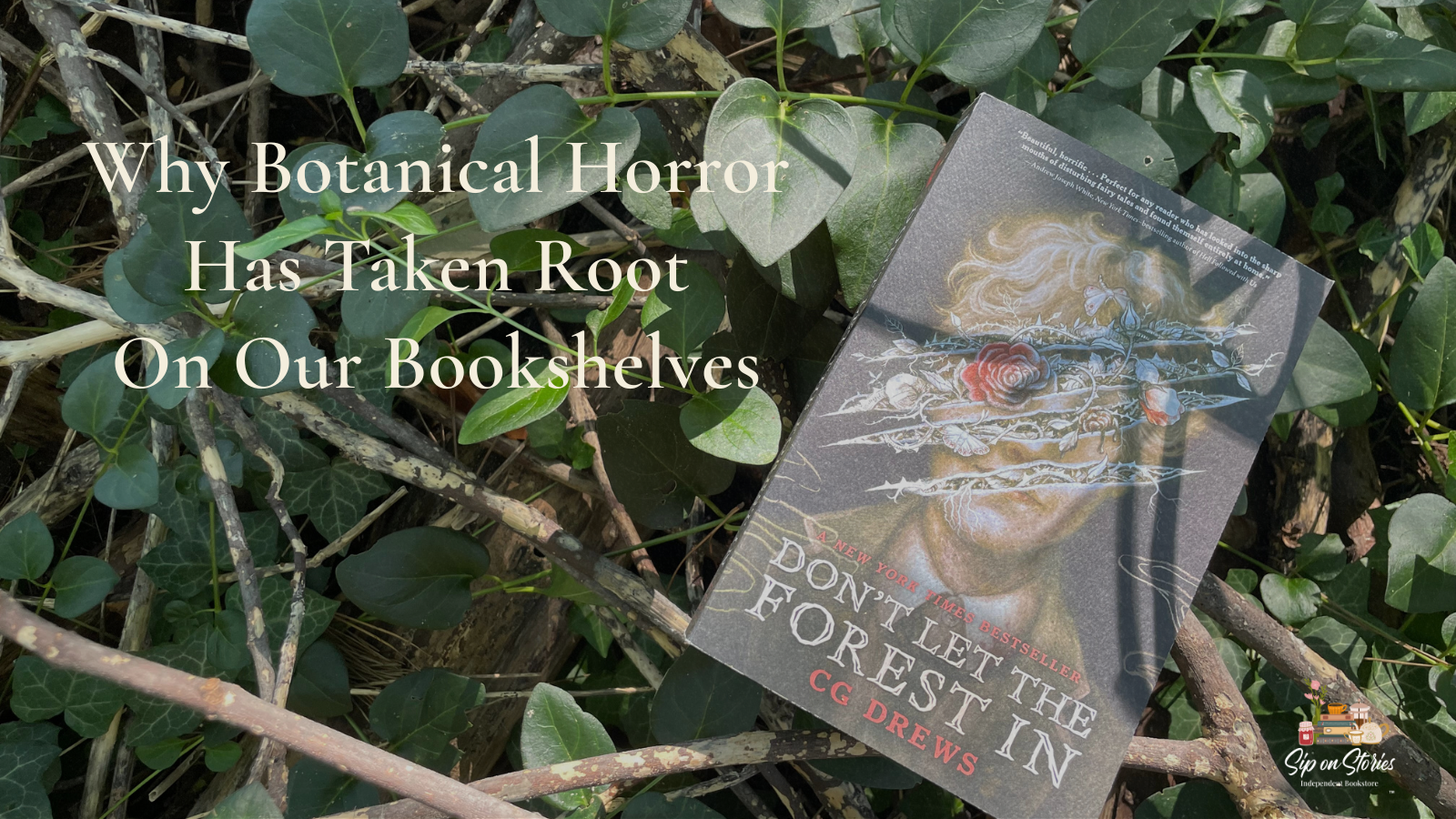
There's something unsettling about stepping into a beautiful forest and wondering what might be watching from between the trees.
Botanical horror has quickly become one of the genres we find ourselves returning to at Sip on Stories. These stories take something familiar: the woods, a garden, flowers, fungi, twisting vines, and transform it into something mysterious, threatening, and sometimes terrifying.
But what makes botanical horror so effective?
Perhaps it's the reminder that nature was here long before us. We can plant gardens, trim hedges, map forests, and attempt to tame the landscape, but the natural world ultimately exists beyond our control.
And in botanical horror, nature has a habit of taking that control back.
When Nature Becomes Part of the Horror
In many horror stories, the setting provides atmosphere. A crumbling house, darkened hallway, or isolated town creates the backdrop for whatever is waiting to frighten us.
Botanical horror takes that idea one step further.
The natural environment often becomes part of the threat itself.
Forests close in. Gardens grow where they shouldn't. Flowers conceal poison. Fungi spread. Roots reach beneath supposedly safe places. Familiar landscapes begin to feel alive.
That shift from beauty to danger is part of what makes botanical horror books so fascinating.
Nature can be breathtaking and comforting while simultaneously being wild, indifferent, and unpredictable. Botanical horror takes advantage of that contradiction, allowing beauty and dread to grow from the same soil.
Why Nature Horror Feels Different
Botanical horror is part of a larger family of nature horror, and the boundaries between botanical horror, eco-horror, folk horror, and Gothic fiction can often intertwine.
What connects many of these stories is the realization that humans aren't necessarily in control.
A traditional monster can be escaped. A door can be locked. A haunted house can, at least theoretically, be left behind.
But how do you escape the forest?
What happens when the garden itself is dangerous?
What if the vines are already growing inside the house?
Some of the best nature horror books turn the landscape into something that feels almost sentient. The setting is no longer simply where the story happens...it becomes a presence within the story.
And sometimes, it becomes the thing you fear most.
A Recent Favorite: Don't Let the Forest In by CG Drews
One of my recent reads perfectly captured everything I enjoy about this genre.
Don't Let the Forest In by CG Drews was an immersive and heartbreaking botanical horror read. This was the second book I've read by Drews, and once again, I was struck by just how excellent their writing is.
At the center of the story are Andrew and Thomas, two boys whose relationship is intertwined with writing, art, obsession, and an increasingly dangerous forest.
The beautiful heartbreak of Andrew and Thomas' story was difficult at times, but those moments felt necessary to the progression of the story. The emotional weight isn't separate from the horror, it makes the darkness surrounding them feel even more powerful.
And the nature horror elements were done perfectly.
The forbidden forest isn't simply a spooky backdrop. It becomes integral to the story as Andrew and Thomas confront nightmarish creatures connected to the twisted fairy tales Andrew writes and the macabre monsters Thomas draws.
As the story progresses, the boundary between creativity, emotion, nature, and horror becomes increasingly difficult to separate.
It's exactly the kind of botanical horror I love: immersive, atmospheric, beautiful, and deeply unsettling.
Beauty and Dread Growing Side by Side
That's the contradiction at the heart of botanical horror.
We naturally associate gardens and flowers with beauty. Forests can represent peace, escape, and adventure. Plants symbolize growth and renewal.
Botanical horror asks us to look again.
An overgrown garden can become claustrophobic. A beautiful flower can be poisonous. Mushrooms can spread decay beneath the surface. A forest can hide something ancient, or simply remind us how small we really are.
There's often a slow-burning quality to these stories, too. The horror doesn't always announce itself immediately. It grows.
A strange bloom appears.
Something moves among the trees.
The garden seems different than it did yesterday.
A root finds its way through a crack.
And suddenly the beautiful setting that drew us into the story is the very thing we no longer trust.
From Haunted Forests to Poisonous Gardens
One of the things we're enjoying most about exploring botanical horror is discovering just how varied the genre can be.
Some books take us deep into ancient or forbidden forests. Others lead us through overgrown estates and Gothic gardens. There are stories centered around poisonous plants, strange fungi, folklore, ecological change, body horror, and nature that refuses to obey the rules we expect it to follow.
Our Botanical Horror collection continues to grow as we discover books that explore nature's darker side.
Alongside Don't Let the Forest In, you'll find titles such as Hazelthorn by CG Drews, What Moves the Dead by T. Kingfisher, The Bog Wife by Kay Chronister, A Botanical Daughter by Noah Medlock, The Bane Witch by Ava Morgyn, Her Wicked Roots by Tanya Pell, and more.
Some are unmistakably botanical horror. Others cross into Gothic fiction, folk horror, psychological horror, or nature horror.
That's part of the fun of exploring the genre, the roots spread in unexpected directions.
Let Us Choose Your Next Botanical Horror Read
Of course, sometimes the best part of discovering a genre is not knowing exactly what you'll read next.
That's why we added Botanical Horror as one of the genre choices for our Cottage Crate.
Our Botanical Horror Cottage Crate is a quarterly curated reading experience for readers drawn to haunted forests, poisonous blooms, dark folklore, Gothic atmosphere, and nature's more unsettling mysteries.
Choose a one-time box when you want a dark literary surprise, or subscribe and let us choose a new botanical horror read for you each quarter.
It's especially suited for readers who love botanical horror, nature horror, folk horror, Gothic fiction, dark cottagecore, and atmospheric stories where the setting feels just as important as the characters.
Think of it as allowing us to lead you beyond the garden gate.
What grows on the other side is part of the mystery.
Keep Exploring Botanical Horror
Earlier this summer, we explored the connection between botanical horror and dark cottagecore and why readers drawn to overgrown gardens, forgotten places, Gothic atmosphere, and the beauty of decay often find themselves at home in both.
If you're just beginning to explore the genre, read Botanical Horror and Dark Cottagecore: Why Readers Love This Haunting Combination next.
You can also visit our Botanical Horror Books guide for recommendations, new discoveries, and more ways to explore nature's darker side.
As autumn approaches and the green of summer slowly begins to fade, it feels like the perfect season to wander a little deeper into the woods.
Just don't let the forest in.
